What do the homes along Farmington’s village green and tree-lined roads have in common? Each tells a story through its architecture. If you can recognize the style, you’ll know what features to expect, what upkeep to plan for, and whether the home fits your lifestyle. In this guide, you’ll learn how to spot Farmington’s most common styles, how they live, and the maintenance to budget for as a buyer. Let’s dive in.
Why Farmington looks this way
Farmington grew in layers. Early New England settlement produced Colonial-era homes near historic centers. Nineteenth-century growth added Greek Revival, Italianate, and Queen Anne dwellings along older roads. Mid-century suburban expansion brought ranches and split-levels in later neighborhoods.
You’ll see historic character around designated districts and landmark estates that reflect the town’s heritage. Connecticut’s climate also shaped construction. Steep roof pitches help with snow, older stone foundations are common, and seasonal freeze-thaw cycles mean drainage and mortar upkeep matter.
Quick ID: the five common styles
Colonial (Georgian and Federal)
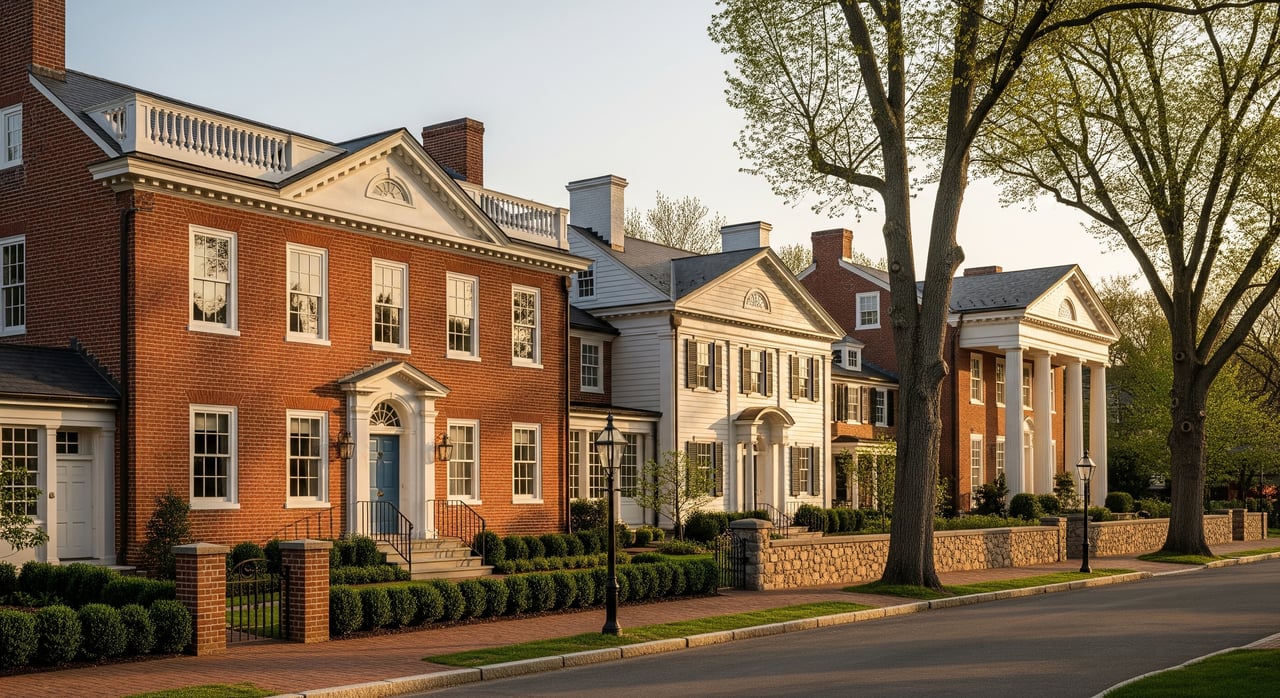
- Visual ID: Symmetrical front, usually five window bays with a centered entry framed by pilasters and a transom. Gabled roof with end or central chimney.
- Typical layout/materials: Timber or balloon frame, wood clapboard, formal entry hall with rooms on either side, interior woodwork and plaster, stone or masonry foundation.
- What buyers value: Period details like fireplaces, paneled trim, and wide-plank floors. A classic, balanced curb presence.
- Upkeep watchlist: Plaster and lathe repair, repointing stone foundations, chimney and stack maintenance, window preservation vs. replacement, attic and wall insulation upgrades, and potential lead paint in pre-1978 finishes.
Cape Cod
- Visual ID: One or one-and-a-half stories with a steep gabled roof and a centered front door. Dormers are common on one-and-a-half story versions.
- Typical layout/materials: Compact footprint with rooms around a central chimney in older examples, wood siding, timber framing.
- What buyers value: Manageable scale, efficient heating footprint, cozy feel, often a more attainable entry point than larger historic homes.
- Upkeep watchlist: Attic ventilation, dormer flashing, small baths and closets that may need reworking, stone foundation stability in older versions, and sensitive kitchen or bath updates.
Saltbox
- Visual ID: Asymmetrical roof with a long rear slope that drops to the first floor. Two stories in front, one in back. Often a central chimney.
- Typical layout/materials: Timber frame, rectangular plan, wood siding.
- What buyers value: Strong Colonial character and distinctive silhouette, with larger front rooms.
- Upkeep watchlist: Long rear roof slope and valleys can be leak-prone, chimney flashing complexity, and evaluation of original framing by a specialist when needed.
19th-century “antique” styles
- Greek Revival: Temple-like gable with wide friezes and corner pilasters, entry with sidelights and transom.
- Italianate: Low-pitch roof with wide eaves and brackets, tall narrow windows, sometimes a cupola or bay.
- Queen Anne/Victorian: Asymmetry, patterned shingles, wrap porches, towers or turrets, layered trim.
- Typical layout/materials: Larger footprints, tall ceilings, ornate woodwork and plaster, porches.
- What buyers value: Decorative detail, large rooms, and porch living.
- Upkeep watchlist: Porch and trim carpentry, paint cycles and rot control, energy performance of original windows, and updating plumbing and electrical across larger, more complex roofs and additions.
Mid-century (Ranch, Split-level, Modern)
- Ranch visual ID: One story with a long horizontal profile, low-pitch roof, attached garage.
- Split-level visual ID: Staggered floors with short runs of stairs and an integrated garage.
- Mid-century modern visual ID: Strong horizontal lines, large glass, open plans, and a connection to the landscape.
- Typical layout/materials: Slab or shallow foundations, brick or wood or stone veneers, large windows, and more open living areas.
- What buyers value: One-level living in a ranch, flexible zones in a split-level, bigger windows, and indoor-outdoor flow. Often easier to modernize than very old homes.
- Upkeep watchlist: Slab drainage and mechanical routing, older single-pane windows, post-war wiring and plumbing updates, attention to low-slope or flat roofs, and potential asbestos-era materials.
Style-by-style buyer quick checks
Colonial quick checks
- Lifestyle match: You like formal rooms, symmetry, and historic charm. You plan to invest in insulation and careful restoration.
- Top 3 maintenance items: Chimney and masonry, insulation and air sealing, window preservation or upgrades.
- Typical red flags: Bulging or cracked stone foundations, large unlined chimneys, widespread plaster cracking or early electrical systems.
Cape quick checks
- Lifestyle match: You want a simpler footprint and manageable utilities, with potential to add dormers or finish a half-story.
- Top 3 maintenance items: Ventilation at roof and attic, dormer and roof flashing, foundation evaluation in older examples.
- Typical red flags: Moist or under-vented attics, cramped baths that need rework, dated insulation.
Saltbox quick checks
- Lifestyle match: You love classic New England silhouettes and want historic character front and center.
- Top 3 maintenance items: Roof slope and valley waterproofing, chimney flashing, structural review of original framing if needed.
- Typical red flags: Signs of leaks along the long rear roof, deteriorated mortar, and chimney issues.
19th-century antique quick checks
- Lifestyle match: You value period detail, porches, and generous rooms and accept more active maintenance.
- Top 3 maintenance items: Porch and trim carpentry, exterior paint cycles and rot repair, electrical and plumbing system updates.
- Typical red flags: Deferred porch repairs, complex roof valleys with leaks, undocumented additions.
Mid-century quick checks
- Lifestyle match: You want open flow, big windows, and either single-level living or split zones.
- Top 3 maintenance items: Roof and drainage on slabs, window upgrades, modernizing wiring and mechanicals.
- Typical red flags: Low-slope roof nearing end of life, basement or slab moisture, original single-pane glass and dated systems.
Match style to lifestyle and budget
- If you want walkable village character and original details, a Colonial, Cape, Saltbox, or Greek Revival may fit. Plan for specialized contractors and a steadier maintenance rhythm.
- If you want turnkey convenience, look to mid-century ranches and split-levels that have already updated HVAC, electrical, and baths.
- Families often prioritize bedroom count, a yard, and proximity to parks and Farmington Public Schools. Empty nesters often look for first-floor living and low yard care.
- Value-focused buyers often target mid-century or less-altered early 20th-century homes that can be modernized with a clear permit path.
Upgrades that pay off in Farmington
Connecticut’s climate rewards smart energy improvements. Attic insulation and air sealing reduce ice dams and heating costs. Balanced roof ventilation protects shingles and gutters.
Older homes benefit from targeted window strategies. Preserving sash with storms can protect character, while selective replacements improve comfort. Modern HVAC and electrical updates are common across eras and add safety and efficiency.
Inspections and due diligence
Do these before you make big decisions:
- Confirm sewer vs. septic and the system’s capacity and condition.
- Review town records and permits for past renovations.
- Request maintenance logs for roof, heating, and chimney service.
- Order a general home inspection. Add specialists for chimney, roof, structural issues, termites or pests, insulation and energy audits, and testing for lead paint, asbestos, or other legacy materials in pre-1980s homes.
Style-specific red flags to watch:
- Colonial/Cape/Saltbox: Unlined chimneys, stone foundation movement, early electrical, significant plaster cracking that may signal structural movement.
- Victorian/Antique: Deferred porch and trim repairs, complex roof valleys, undocumented additions.
- Mid-century: Slab drainage issues, aging low-slope roofs, single-pane windows, dated boilers or wiring, and potential asbestos-era materials.
Historic districts and approvals
Parts of Farmington sit in designated historic districts. Exterior changes visible from the street often require review. Interior renovations are commonly feasible but confirm load-bearing conditions in timber-framed homes before opening walls.
Start by contacting the Town of Farmington Planning and Zoning and the Building Department for permits and records. If the home is in a historic district, reach out to the Farmington Historic District Commission. The Connecticut State Historic Preservation Office and the Connecticut Trust for Historic Preservation can provide guidance on best practices and incentives. Confirm potential tax incentives and check insurance requirements for older systems.
Your next steps
- Map your preferred areas. Decide if you want a village setting with historic character or a mid-century subdivision.
- List your non-negotiables. Think mechanical updates, bedroom count, yard size, and parking.
- Set an upgrade budget. Get ballpark estimates for insulation, HVAC, roof work, and kitchen or bath updates.
- Identify permitting and review needs early. If a home may have district oversight, factor timelines into your plan.
When you are ready to walk through options, you deserve guidance that blends historic sensitivity with modern practicality. If you need culturally specific advice, including Sharia-compliant financing resources or multilingual support, you can count on a calm, step-by-step process. For local, boutique representation backed by global marketing, connect with Noora Brown.
FAQs
How do I tell Colonial, Cape, and Saltbox apart?
- Colonial is two stories with a symmetric five-bay front, Cape is one or one-and-a-half stories with a steep roof and dormers, and Saltbox has a long rear roof slope that creates an asymmetrical profile.
Are Farmington historic-district rules very strict?
- Many districts require review for exterior changes visible from the street, so contact the local Historic District Commission early to confirm what applies to your property.
Will an older Farmington home be expensive to heat?
- Older homes often have less insulation and more air leaks, but attic insulation, air sealing, and efficient heating systems can improve comfort and control costs.
Do I need specialized inspectors for antique homes?
- Yes, add chimney, structural, and hazardous materials specialists alongside a general home inspector when evaluating older properties.
Can I add modern amenities without losing historic character?
- Yes, many renovations succeed by keeping significant features while updating kitchens, baths, and systems, with exterior changes in districts reviewed for compatibility.